Labour Management कैसे करें Site पर
Labour Management on Construction Site | Complete Guide for Site Engineers
Powered by CivMasterPro
Labour management is one of the most important responsibilities on any construction site. If labour is not managed properly, projects can face delays, cost overruns, low productivity, safety issues, and poor quality work.
Every site engineer, project engineer, and construction supervisor should understand proper labour management construction techniques to maintain smooth site operations and complete the project on time.
📌 What is Labour Management?

Labour management means:
- Assigning the right work to workers
- Maintaining attendance records
- Monitoring daily productivity
- Ensuring safety and discipline
- Managing manpower efficiently
- Reducing idle time and delays
📌 Why Labour Management is Important?
- Project completes on schedule
- Construction cost remains under control
- Work quality improves
- Labour disputes reduce
- Site productivity increases
- Material wastage decreases
- Safety improves on site
📌 Step-by-Step Labour Management Process
1. Proper Planning Before Work Starts
Before starting any activity, proper manpower planning is necessary.
Plan the following:
- Number of masons required
- Helpers and labour strength
- Carpenters and bar benders needed
- Daily work targets
- Material availability
- Machinery requirement
Proper planning helps avoid labour shortages and unnecessary delays.
2. Maintain Daily Attendance Record

Daily attendance tracking is very important for labour control and salary management.
Maintain:
- In-time and out-time
- Present and absent record
- Overtime details
- Trade-wise labour count
This helps in:
- Salary calculation
- Productivity analysis
- Contractor verification
- Labour billing
3. Track Daily Work Progress
Daily work monitoring helps identify productivity issues quickly.
Track activities like:
- Brickwork quantity
- Plaster area completed
- Concrete poured
- Steel fixing completed
- Excavation quantity
Daily progress tracking helps improve efficiency and control labour performance.
4. Use Supervisor or Mate System
Managing a large number of workers directly can become difficult.
A better approach:
- 1 Mate = 10 to 15 labour
- Supervisor monitors daily activities
- Mate reports progress to engineer
This improves communication and site control.
5. Ensure Safety on Site
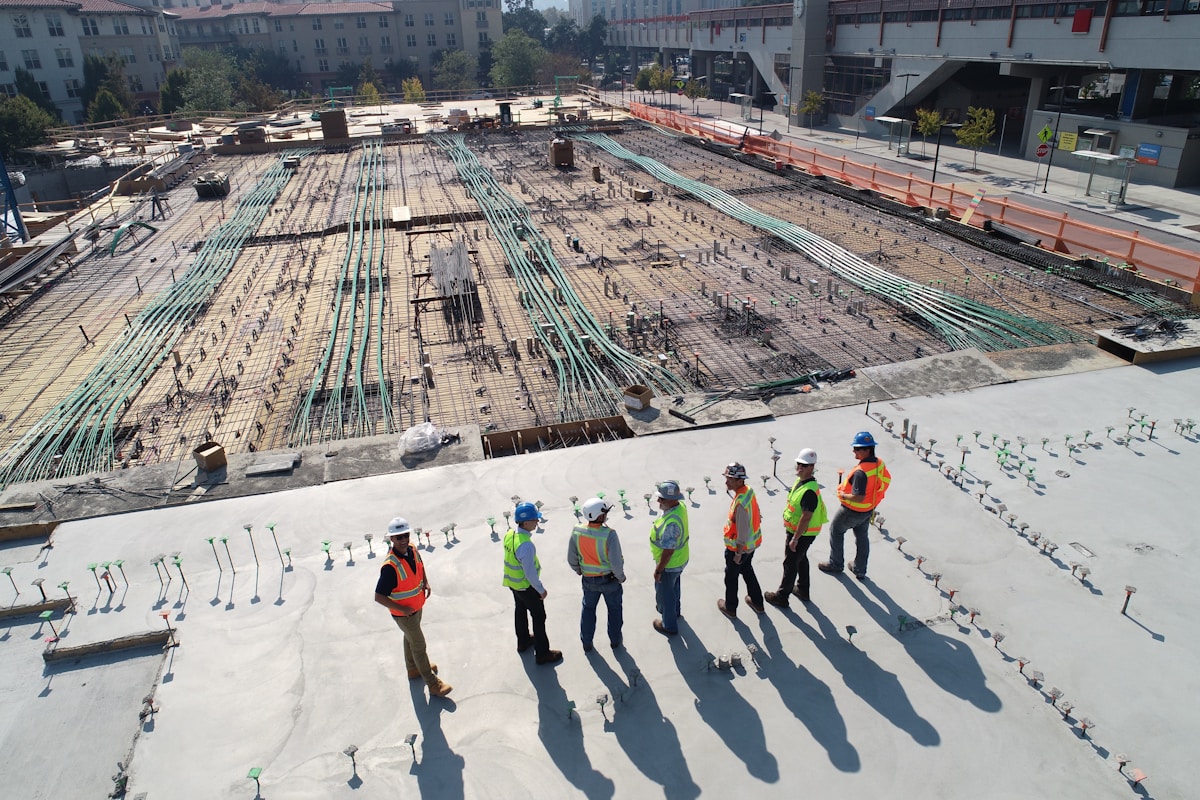
Safety is a critical part of labour management.
Mandatory safety practices:
- Safety helmet compulsory
- Safety shoes mandatory
- Use gloves and reflective jackets
- Daily toolbox talks
- Stop unsafe work immediately
- Maintain housekeeping on site
Good safety management reduces accidents and work stoppage.
6. Improve Labour Motivation
Motivated labour performs better and works faster.
Simple methods:
- Provide payment on time
- Respect workers
- Give proper rest breaks
- Provide drinking water and shade
- Reward high productivity
- Recognize skilled workers
7. Coordinate Labour and Material Properly
Labour should never remain idle due to material shortage.
Ensure:
- Material available before work starts
- Work front cleared in advance
- Tools and machinery ready
- Drawings available on site
Idle labour directly increases project cost.
📌 Common Labour Problems and Solutions
| Problem | Solution |
|---|---|
| Labour absent | Maintain backup labour team |
| Slow work progress | Fix daily targets and monitor productivity |
| Poor quality work | Increase supervision and inspection |
| Frequent disputes | Resolve issues immediately |
| Safety violations | Conduct toolbox talks daily |
| Idle labour | Improve planning and material coordination |
📌 Daily Site Report Format
PROJECT NAME: ____________________
DATE: ____________________
LOCATION: ____________________
1. WORK DETAILS
- Excavation: ______
- PCC: ______
- RCC: ______
- Brickwork: ______
- Plaster: ______
2. LABOUR DETAILS
- Mason: ___
- Helper: ___
- Carpenter: ___
- Bar Bender: ___
- Total Labour: ___
3. MATERIAL STATUS
- Cement: ___ Bags
- Sand: ___ m³
- Aggregate: ___ m³
- Steel: ___ kg
4. MACHINERY STATUS
- Excavator: Working / Idle
- Mixer Machine: Working / Idle
- Vibrator: Working / Idle
5. ISSUES / PROBLEMS
_____________________________________
6. REMARKS
_____________________________________
Prepared By: ____________________
📌 Labour Attendance Sheet Format
| Date | Name | Work Type | In Time | Out Time | OT Hours | Status |
|---|---|---|---|---|---|---|
| 14/05/2026 | Ram Kumar | Mason | 8:00 AM | 6:00 PM | 2 | Present |
📌 Labour Payment Sheet Format
| Name | Work Type | Days | Rate | Total Amount |
|---|---|---|---|---|
| Ram Kumar | Mason | 26 | 700 | 18,200 |
📌 Productivity Calculation Formula
Productivity = Total Work Done ÷ Total Labour
Example:
100 sqm plaster ÷ 10 labour
= 10 sqm per labour
📌 Important Labour Productivity Benchmarks
| Activity | Approx Productivity |
|---|---|
| Brickwork | 1 to 1.5 m³ per mason/day |
| Plaster | 8 to 12 sqm/day |
| Bar Bending | 80 to 120 kg/day |
| Concrete Work | Depends on batching system |
📌 Expert Tips for Site Engineers
- Conduct morning briefing daily
- Fix daily work targets
- Prepare weekly progress reports
- Use Excel or mobile tracking apps
- Maintain labour productivity records
- Coordinate labour with material planning
- Always keep backup labour available
- Maintain discipline professionally
📌 Common Mistakes in Labour Management
- No attendance tracking
- Poor planning before work
- Ignoring safety practices
- Improper labour allocation
- Late payment issues
- Weak supervision
- No productivity monitoring
🔗 Related Civil Engineering Articles
👉 Construction Billing Process Guide
👉 Brick Work Calculation Guide
👉 Earthwork Calculation Method
👉 Leveling by Auto Level Method
🎯 Conclusion
Labour management is one of the biggest success factors in construction projects. Proper planning, attendance tracking, productivity monitoring, safety management, and good coordination help complete projects smoothly and on time.
If a site engineer properly manages:
- Labour attendance
- Daily productivity
- Material coordination
- Safety practices
- Work planning
then project execution becomes faster, safer, and more profitable.
🚀 Learn Practical Civil Engineering
Learn Site Execution, Highway Engineering, QA/QC, BOQ Billing, AutoCAD, Quantity Estimation, and Construction Management with:


Comments
Post a Comment
Please share your practical site experience, questions, or technical doubts related to civil engineering, highway construction, AutoCAD, QA/QC, BOQ billing, or MoRTH standards. Spam or promotional links will be removed.